Journal
Travel & Madaba

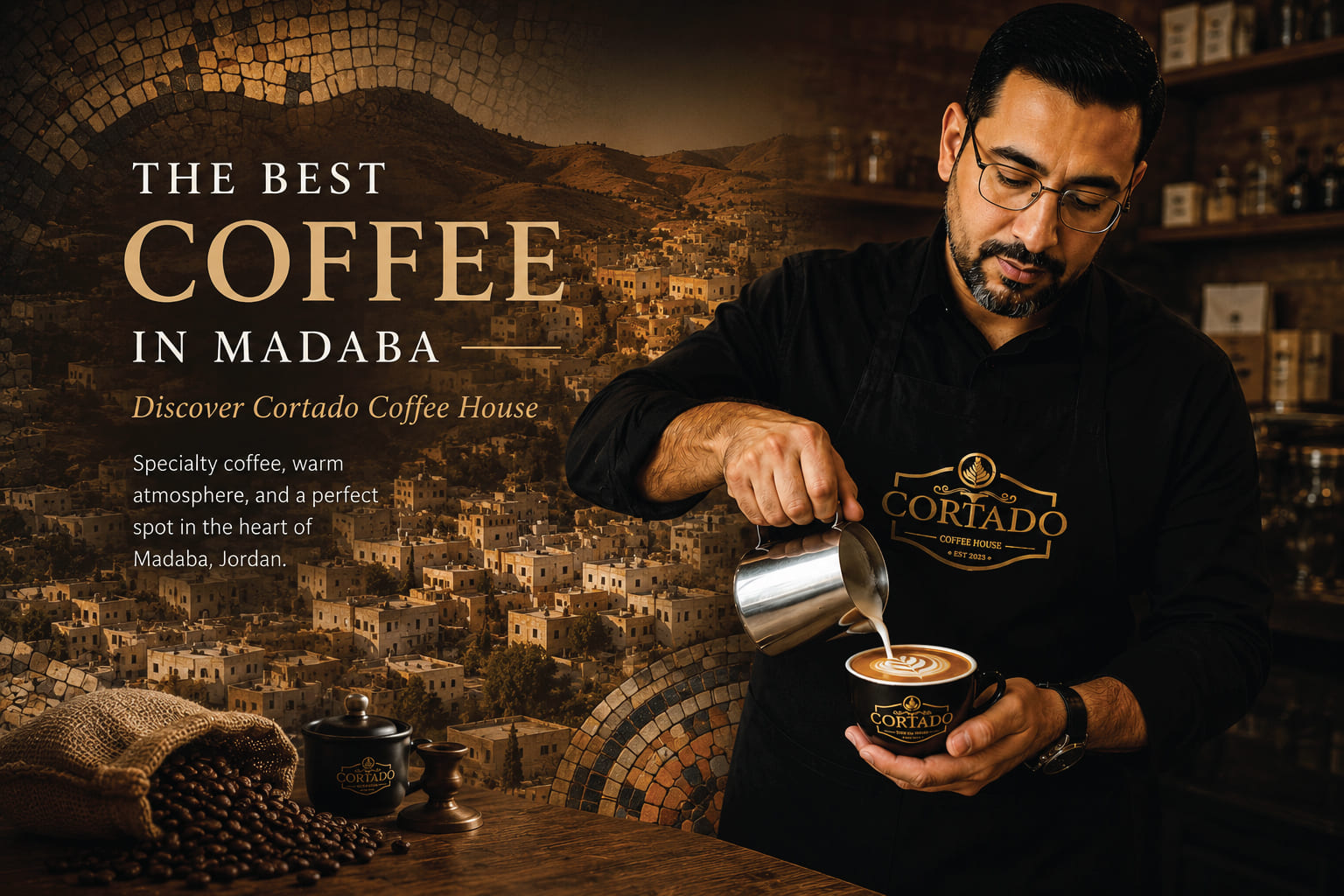
Looking for Coffee in Madaba?
Where to Go, What to Order, and How to Spot a Great Cup
Whether you are a visitor between mosaics and Mount Nebo or a local looking for your new daily cup, this guide covers the coffee culture of Madaba — from cardamom-scented Arabic coffee to carefully pulled espresso — and how to find a cup worth stopping for.
Madaba is a city that runs on coffee. It is offered in shops before you have even asked about the price, poured for guests the moment they sit down, and shared over long conversations late into the evening. But if you arrive in town after a morning at the Madaba Map or a drive down from Amman and simply want a really good cup, knowing where to go — and what to order — makes all the difference.
This guide is written from behind the bar. We will walk you through the kinds of coffee you will find in Madaba, how to tell a careful coffee shop from a careless one, what every drink on a modern menu actually is, and how to fit a proper coffee stop into a day of sightseeing. By the end, you will order with confidence wherever you are.
The short answer
If you are in a hurry and just want specialty coffee in Madaba, here is everything you need in one place.
| You're looking for | Our recommendation |
|---|---|
| Specialty espresso and filter coffee | Cortado Coffee House, Al-Yarmouk St., next to Mosaic City Hotel |
| Opening hours | Every day, 8:00 AM – 10:00 PM |
| Skip the wait | Order ahead through the Cortado Coffee House app (iOS and Android) |
| Questions or directions | WhatsApp +962 77 921 0093 |
| Traditional Arabic coffee | Accept it whenever it is offered — in shops, homes and guesthouses |
Coffee culture in Madaba
In Jordan, coffee is far more than a caffeine habit. It is the first thing offered to a guest and often the last thing shared before they leave. Shopkeepers in Madaba's old centre may offer you a small cup while you browse their mosaics or carpets. Families greet visitors with coffee before anything else. At weddings, funerals and important gatherings, the serving of coffee follows customs passed down for generations.
Alongside this deep tradition, a new coffee culture has been growing across Jordan over the past decade: specialty coffee. Young Jordanians, returning travellers and visitors from around the world have brought with them a taste for espresso drinks, pour-over coffee and beans with a known origin. Madaba, with its steady flow of international visitors and its proud local community, sits right where these two worlds meet.
Three kinds of coffee you'll meet in Madaba
Qahwa sada — Arabic coffee
Bitter, concentrated coffee spiced with cardamom, poured from a dallah into tiny cups. The coffee of hospitality and ceremony.
Everyday boiled coffee
Finely ground coffee, often with cardamom, boiled in a small pot and served with the grounds settling at the bottom. Found in homes and offices across Jordan.
Specialty espresso
Freshly roasted, carefully sourced beans extracted under pressure — the base for espresso, cortados, cappuccinos and lattes.
Filter and pour-over
Hand-brewed methods like V60 that reveal the delicate fruit and floral notes of single-origin coffees.
If you only drink coffee in cafés during your visit, you will miss half the story. Accept the small cup a shopkeeper or host offers you — it is a gesture of welcome, and declining entirely can feel impolite. Then come to a specialty bar for the other half.
How to spot a great coffee shop
A beautiful interior and a long menu say very little about the coffee. These are the signs baristas look for when they walk into a café anywhere in the world — and they work just as well in Madaba.
| Sign | What it tells you |
|---|---|
| Beans ground to order | Coffee loses aroma within minutes of grinding. A grinder running for each drink means fresher flavour. |
| Staff who can name the origin | If the barista knows where the coffee comes from and how it should taste, someone is paying attention. |
| Clean equipment | A wiped steam wand and clean portafilters prevent burnt, bitter flavours from old coffee and milk. |
| Silky, glossy milk | Well-textured milk looks like wet paint, not dry foam. It tastes sweeter and blends smoothly with the espresso. |
| Shots timed and weighed | Scales and timers on the bar mean the espresso is being measured, not guessed. |
| Honest recommendations | A good barista will ask what you like and suggest something — even if it is not the most expensive drink. |
"Darker and more bitter means stronger and better." Bitterness is often a sign of over-roasting or over-extraction, not quality. A well-made espresso should taste sweet and balanced, with bitterness in the background — not burnt.
A guide to espresso drinks
Modern coffee menus can feel like a foreign language. Almost every drink, though, is built from the same two ingredients — espresso and milk — in different proportions. Once you know the ratios, you can order anything with confidence.
| Drink | What's in it | Tastes like |
|---|---|---|
| Espresso | A short, concentrated shot of coffee | Intense, syrupy, the purest expression of the bean |
| Macchiato | Espresso "marked" with a spoonful of milk foam | Almost as strong as espresso, slightly softer |
| Cortado | Espresso with an equal amount of warm, lightly textured milk | Balanced — coffee first, milk as support |
| Flat white | Espresso with a thin layer of silky microfoam, in a small cup | Velvety and coffee-forward |
| Cappuccino | Espresso with steamed milk and a thicker layer of foam | Light, airy and comforting |
| Latte | Espresso with plenty of steamed milk and a little foam | Mild, creamy, the gentlest option |
| Americano | Espresso diluted with hot water | Similar in strength to filter coffee, with espresso character |
Sizes and exact ratios vary from café to café, but the logic stays the same: the more milk, the softer and sweeter the drink; the less milk, the more the coffee itself speaks.
Why the cortado?
We named our coffee house after this drink for a reason. Cortado comes from the Spanish verb cortar, "to cut" — the espresso is cut with an equal amount of warm milk. The milk is steamed with very little foam, so it softens the coffee's intensity without hiding it.
The result is a small drink with a lot to say. You still taste the origin, the roast and the sweetness of the espresso, but with a rounder, gentler texture. For many people it is the perfect middle ground: stronger and more flavourful than a latte, kinder than a straight shot. It is also one of the best ways to judge a coffee shop, because there is nowhere for a bad espresso to hide.
"A cortado is honest. Half coffee, half milk, and nothing to hide behind."
— Cortado Coffee House, Madaba
Filter coffee and single origins
If you usually drink espresso with milk, try a cup of filter coffee at least once during your visit. Hand-brewed methods such as the V60 pour-over extract coffee more gently and at a lower concentration, revealing flavours that espresso and milk often hide — jasmine and lemon in a washed Ethiopian coffee, for example, or caramel and red apple in a Colombian.
"Single origin" simply means the coffee comes from one country, region or farm rather than a blend. It is the coffee equivalent of a wine from a single vineyard: more distinctive, sometimes more surprising, and always a little different with each harvest.
Filter coffee changes as it cools. Many single origins taste sweeter and fruitier at around 50–60°C than when they are piping hot, so take your time and sip slowly.
Coffee through the seasons
Madaba sits high on a plateau, so its climate has real seasons — and what you want in your cup changes with them.
| Season | Weather in Madaba | What to order |
|---|---|---|
| Spring | Mild days, cool evenings | Filter coffee or a single-origin espresso — the best time to taste delicate flavours |
| Summer | Hot and dry afternoons | Iced latte, iced americano or an iced filter coffee |
| Autumn | Warm days, fresh evenings | A cortado or flat white, morning or afternoon |
| Winter | Cold, sometimes rainy | Cappuccino or latte — warmth and comfort in a bigger cup |
Fitting coffee into a day in Madaba
Madaba is compact, and most of its sights sit within a short walk or taxi ride of each other. Here is a simple way to build a coffee stop into a day of exploring.
Start early with espresso
Grab a quick espresso or cortado as soon as we open at 8:00 AM, then head to St. George's Church to see the Madaba Map before the tour groups arrive.
Explore the mosaics
Walk through the Archaeological Park and the Church of the Apostles, and browse the mosaic workshops in the old centre.
Slow down at midday
After lunch, take a proper break with a filter coffee or a cold drink in summer. It is the perfect moment to plan the afternoon.
Mount Nebo at sunset
Drive up to Mount Nebo for the late-afternoon light over the Dead Sea and the Jordan Valley.
An evening cup back in town
We are open until 10:00 PM, so there is time for a relaxed evening coffee before dinner or after.
Heading out early or travelling with a group? Order ahead in the Cortado Coffee House app so your drinks are ready when you arrive — no waiting at the bar.
Coffee etiquette for visitors
Jordanians are famously welcoming, and nobody expects visitors to know every custom. Still, a few small gestures go a long way.
- Accept the first cup. When Arabic coffee is offered, take at least one cup with your right hand. It is a sign that you accept the welcome.
- Shake the cup when you're done. Gently tilting the small cup from side to side tells the host you have had enough. Otherwise they will keep refilling it.
- Don't rush a host. Coffee in a home or shop is part of a conversation, not a transaction. Sit, talk and enjoy it.
- Ask questions at the bar. In a specialty coffee shop, baristas genuinely enjoy explaining the coffee. Asking "what do you recommend today?" is always welcome.
Common mistakes when looking for coffee
- Judging a café by its decor. A beautiful room does not guarantee good coffee. Look at the grinder, the milk and the people behind the bar.
- Always ordering the biggest drink. Larger drinks mean more milk and less coffee flavour. If you want to taste the coffee, go smaller — a cortado or flat white.
- Adding sugar before tasting. Well-made specialty coffee is often naturally sweet. Taste first, then decide.
- Drinking it scalding hot. Very hot coffee numbs the palate. Give it a minute or two and the flavours open up.
- Skipping filter coffee. If you only drink milk-based drinks, you will never discover how fruity or floral coffee can be.
- Only drinking coffee in cafés. Some of the most memorable cups in Madaba are poured by a host, not a barista.
Visiting Cortado Coffee House
You will find Cortado Coffee House on Al-Yarmouk Street, next to Mosaic City Hotel. We are open every day from 8:00 AM to 10:00 PM, for an early espresso before the Madaba Map, a slow afternoon filter, or an evening cortado after a day of exploring.
Every morning, before the doors open, our baristas calibrate the espresso — pulling and tasting shots, adjusting grind and dose until the extraction is exactly right for that day's conditions. Our single-origin coffees, including lots from Colombia and Ethiopia, are prepared as espresso, as cortados, and as hand-brewed filter, so you can taste the same bean in different ways.
And if you want to understand what you are drinking, just ask. Our team is always happy to explain where the coffee comes from, how it was processed and what to look for in the cup. You can also browse the full menu and order ahead through our app — so whether you are a visitor on a tight schedule or a local on your way to work, your coffee is ready when you are.
Coffee in Madaba — your questions answered
Where can I find specialty coffee in Madaba?
Cortado Coffee House on Al-Yarmouk Street, next to Mosaic City Hotel, serves specialty espresso drinks and filter coffee made from single-origin beans. It is open every day from 8:00 AM to 10:00 PM.
What time do coffee shops open in Madaba?
Opening times vary by café. Cortado Coffee House opens daily at 8:00 AM and closes at 10:00 PM, making it easy to grab a coffee before an early visit to the Madaba Map or after a sunset at Mount Nebo.
What is a cortado?
A cortado is an espresso "cut" with an equal amount of warm, lightly textured milk. The name comes from the Spanish word cortar, meaning "to cut". It is stronger than a latte but softer than a straight espresso.
Can I order coffee ahead in Madaba?
Yes. The Cortado Coffee House app, available free on iOS and Android, lets you browse the menu and order ahead so your drink is ready when you arrive.
What is traditional coffee in Jordan?
Traditional Jordanian coffee includes qahwa sada, a bitter Arabic coffee spiced with cardamom and served in small cups as a sign of hospitality, as well as finely ground coffee boiled with cardamom that is drunk daily in homes.
Is it rude to refuse coffee in Jordan?
It is polite to accept at least one cup when coffee is offered, as it is a gesture of welcome. When you have had enough Arabic coffee, gently shake the cup from side to side before handing it back.
What should I order if I don't usually drink strong coffee?
A latte or cappuccino is the gentlest choice, with plenty of milk to soften the espresso. If you want to taste a little more of the coffee itself, try a flat white or a cortado.
How do I contact Cortado Coffee House?
You can call or message on WhatsApp at +962 77 921 0093, or follow @cortado_coffeehouse on Instagram for updates.